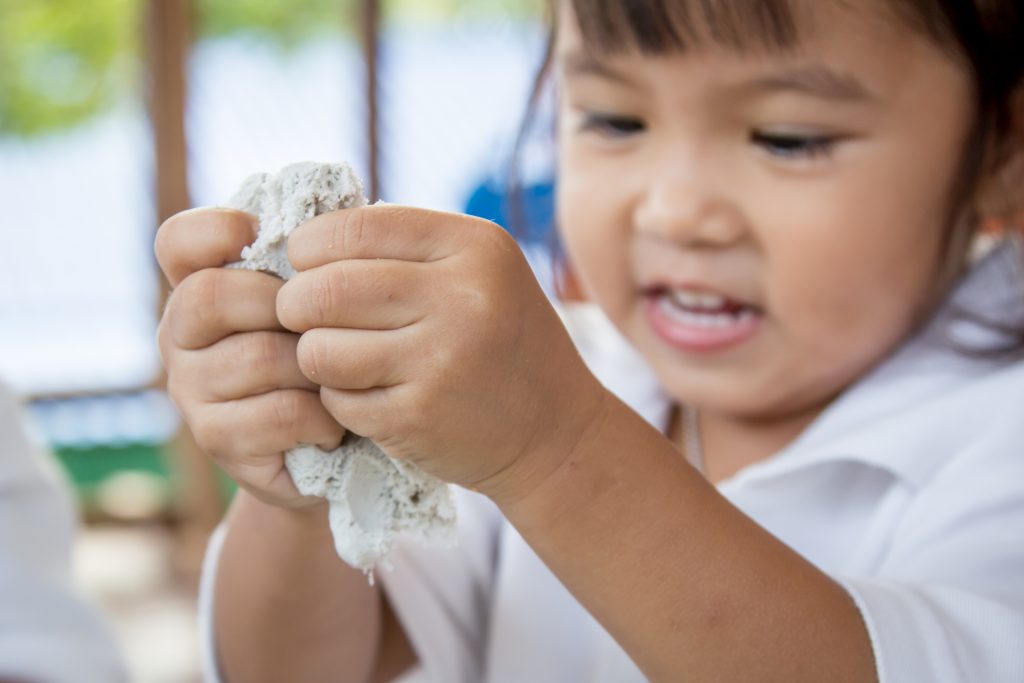
Fine motor skills are the ability to make movements using the small muscles in our hands and wrists. Children need to develop these fine motor skills to achieve everyday tasks such as colouring and drawing, using technology such as a keyboard or tablet, brushing teeth and hair, eating, unwrapping food in their packed lunch box, playing instruments, playing with toys, getting dressed and of course writing. So many of our every day tasks rely on fine motor skills and the good news is that there are so many ways that you can help your child practice and hone these. It is important to remember to keep it fun! Fun activities can take a child’s mind off the process and of course make it far more likely that they will want to get involved!
Arts And Craft Activities
• Colouring: Draw, colour, scribble, and write using pencils, crayons, and markers.
• Gluing activities: You can provide your child with stickers, fake gems or fun pictures for gluing.
• Cutting activities: Provide your child with paper and some child-safe scissors.
• Painting: You can use paint brushes, but why not try cotton buds or other implements such as sticks or kitchen utensils to change things up a bit!
• Stencils. Trace round stencils or even hands or other household objects.
Tactile Experiences
• Playdough: Encourage twisting, squeezing, pulling and rolling. Can they use tools such as toothpicks to make patterns and marks?
• Finger painting: Finger painting can be fun while also working those small muscles.
• Treasure Hunts: Hide small items such as beads or sequins in slime, sand, or jelly for your child to retrieve using fingers or tweezers.
• Playing with shaving cream: Shaving cream activities are an exciting way to encourage fine motor skills. Can they draw pictures, shapes or letters in the foam?
Small Manipulatives
• Threading: Encourage your child to thread beads or pasta shapes on to a string, or use a hole punch to punch holes around the edge of a sheet of card and let your child thread string in and out of the holes. Pulling and pushing pipe cleaners through a colander is another fun way to practice those fine motor skills!
• Building blocks: Choose age-appropriate building blocks for your child. Building, but also sorting through the blocks and collecting what they need works to help develop fine motor skills.
• Sorting tins: Pull out a tub and a random assortment of small toys. Let your child sort them according to type or colour. Or fill a container with pom-poms and use kid tweezers to pull them out and sort them.
• Magnets: Choose an age-appropriate set of magnets for your child. They can use shapes to create masterpieces on the fridge, or try magnetic building blocks.
• Nuts and Bolts: Turning nuts onto various sized bolts is great practice for those fine twisting movements.
Every day is a learning opportunity! Be patient and allow your child to have a chance to practice day-to-day tasks that can help with their fine motor skills. Give them time to attempt their own zips and buttons, let them help with meal prep such as opening packets, stirring and if age appropriate, cutting. Ask them to help put the lids on your Tupperware collection or the clothes pegs on the washing. Even unwrapping sweets is an opportunity to practice those important fine motor skills!