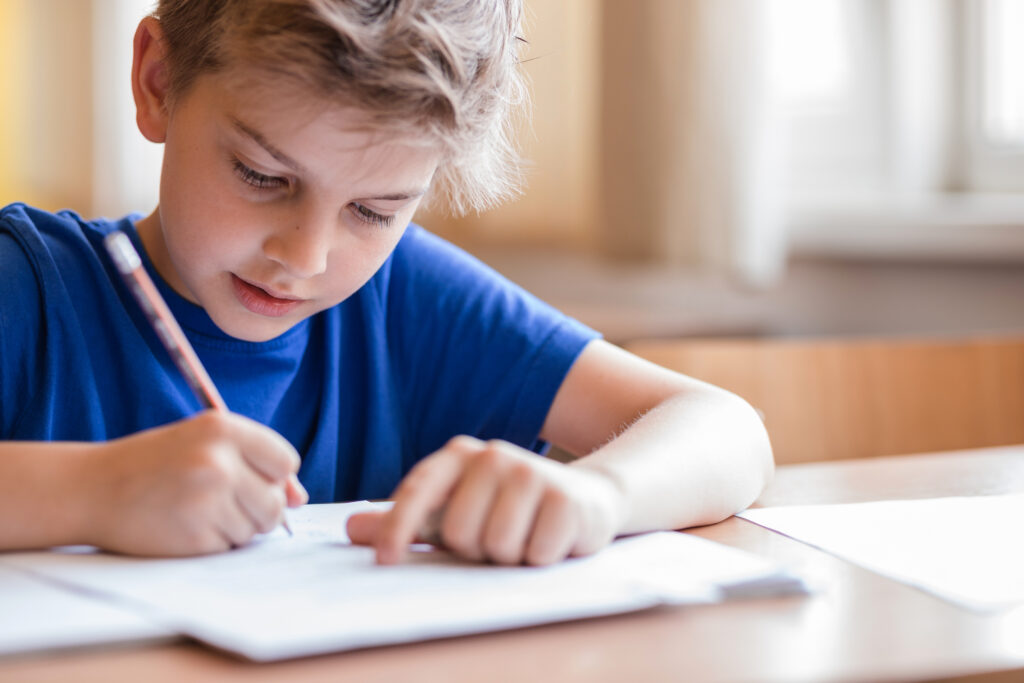
Handwriting is an important skill for children to master as it is a way for them to express themselves and communicate with the world around them. Here are some tips to help parents and care-givers encourage handwriting skills.
When teaching children the letters, it is helpful to group together letters into ‘families of letters’ as this is an easier way for children to learn their formation. Ensure children are forming each letter in the ‘family’ correctly before moving onto the next one.
Curly Caterpillar Letters: a, c, d, e, f, g, o, q, s
Long Ladder Letters: I, j, l, t, u, y
One-Armed Robot Letters: b, h, k, m ,n , p, r
Zig-Zag Monster Letters: v, w, x, z
Before mastering handwriting with pen and paper there are fun activities that you can use to practice the shape of each letter and the movements required to form it.
• Try practicing shapes in a range of textures, like sand or shaving foam.
• Write on a chalkboard or use chalks on the pavement.
• Paint the letters.
• Make the letters out of beads.
• Draw them in the air with a finger.
• Use water and paintbrushes to write on walls and fences outside, or use a washing up liquid bottle filled with water to squirt the letters on the ground.
• For older children, paper activities like dot-to-dot, and mazes can help with mastering pencil control.
Once your child is ready to start writing on paper, it’s important to get the positioning right!
• Posture: Sitting with their back straight and feet flat on the floor, close enough to the table that they can rest their elbows on it.
• Paper: The paper should be tilted at 30°-45°. For right-handed people the top right-hand corner should be higher than the left-hand corner and for left-handed people the top left-hand corner should be higher than the right-hand corner.
• Pencil Grip: Using cut down pencils and crayons or finger grips can help with getting the correct pincer grip.
• Writing Hand: The hand should be underneath the writing. Having the paper correctly tilted will mean that there is no reason for a left-handed person to ‘hook’ their hand above the writing.
• Non-Writing Hand: It should be placed flat on the paper above where they are writing, it is used to help hold the paper steady and keep the body in the correct upright position.
Children are much more likely to want to practice writing if they can see the relevance and gain enjoyment from it. You can encourage your child by giving writing a purpose and keeping things fun.
• Encourage them to make, and write in cards for family and friends, and encourage family members to write back so children can understand the enjoyment of receiving a letter!
• Help them create their very own book.
• Ask for their help to write shopping lists.
• Get them to keep the scores in games.
• For older children, keeping a diary can be a rewarding experience. Choose a special book or let them personalise their own.